
 The U.S. Equal Employment Opportunity Commission (EEOC) has launched its new National Enforcement Plan (NEP) for fiscal years 2025–2029, signaling a major shift in federal workplace antidiscrimination policy. Moving away from past strategies, the agency is decreasing its focus on "disparate impact" which involves unintentional discrimination caused by neutral company policies. Instead, the EEOC is directing its resources toward tackling intentional discrimination. Under this new direction, the agency will closely examine corporate Diversity, Equity, and Inclusion (DEI) initiatives, specifically targeting practices like hiring quotas, diverse interview panels, and mandatory diversity statements.
The plan also emphasizes the agency should actively target businesses that favor temporary visa holders over qualified domestic applicants, viewing such practices as an ‘anti-American’ form of national origin discrimination. At the same time, the agency is adjusting its legal strategies to raise the bar for employers trying to deny religious accommodations in the workplace. Under the updated standards, companies must now prove that accommodating an employee's faith would result in substantial increased costs or structural disruptions to their business operations. Teukolsky Law condemns the EEOC’s weakening of federal protections for employees. Fortunately, California law is far more protective of workers than federal law, and workers in our state are still protected by California’s robust anti-discrimination statutes. Lauren Teukolsky has represented workers for over two decades and her commentary on the latest developments in employment law is regularly featured by major publications such as Bloomberg Law, Law360, The Guardian, and the Los Angeles Times. If you would like to speak with her about an employment matter, click here.
0 Comments
 The Department of Labor (DOL) recently proposed several new changes to wage and hour laws. The DOL published a proposed rule to restructure wage calculations for H1-B immigrant workers last month, raising their minimum wage and making it more costly for employers to sponsor entry-level workers.
In February, the DOL proposed a rule to rescind the 2024 Biden-era guidance on the classification of independent contractors. The rules return to the 2021-Trump-era rule, the “economic dependence” test, and lower the bar for workers to be classified as independent contractors. The test examines the opportunity for workers to earn profits or incur losses based on their initiative and the degree of control a worker exercises over their work. The DOL has also proposed rules that make it more difficult for employees to prove joint employer liability. The new rule narrowly defines a joint employer as any business which has “substantial direct and immediate control” over another employer’s workers. Employers that meet the joint employer criteria are potentially liable for unfair labor practices committed by the other companies and they have a duty to negotiate with a union representing the jointly employed workers. Under this narrow definition, workers will have a harder time proving that another company is jointly liable for federal bargaining obligations or for unfair labor practices. Lauren Teukolsky has represented workers for over two decades and her commentary on the latest developments in employment law is regularly featured by major publications such as Bloomberg Law, Law360, Law.com, and the Los Angeles Times. If you have a wage-and-hour issue and would like to speak with her, click here. 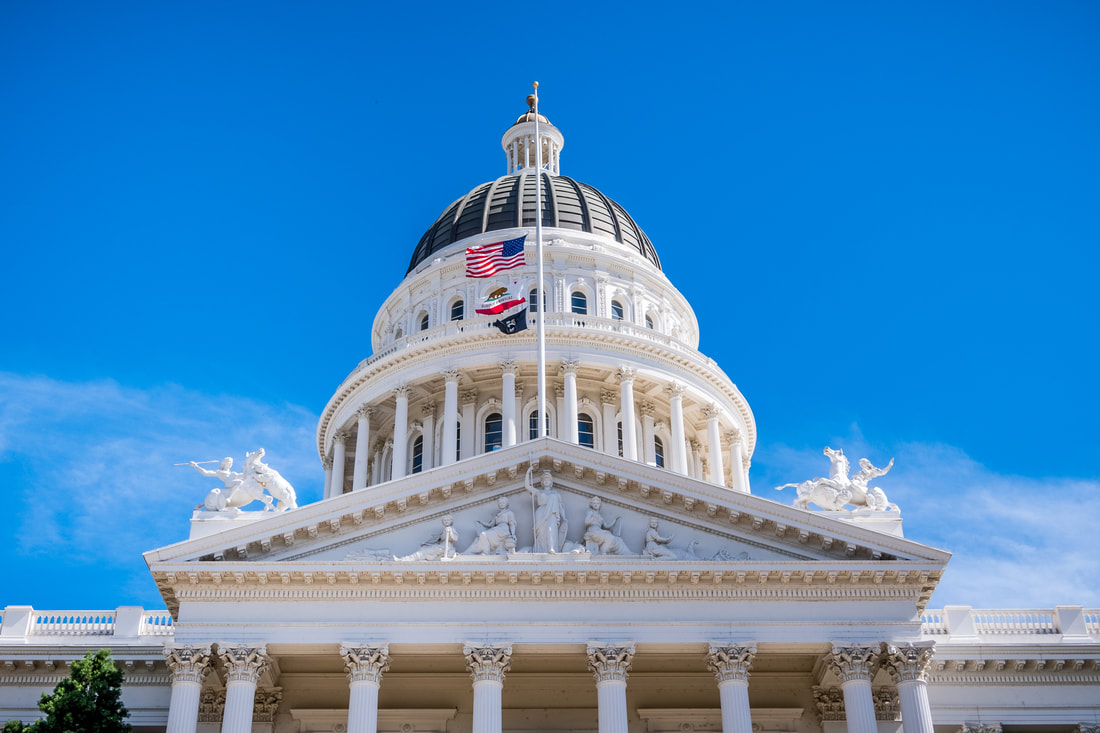 2022 was a big year for employment law in California, with Governor Gavin Newsom signing a slew of employment bills into law that will improve protections and conditions for the state’s workers. Now that the Governor has finished signing new laws for the year, Teukolsky Law would like to take a moment to review the progress that’s been made for California’s workers.
(All bills take effect on January 1, 2023, unless otherwise noted.) Assembly Bill 1041 AB 1041 allows employees to take paid sick leave and family leave to care for a “designated individual.” California law previously allowed employees to take family leave only for family members, whereas AB 1041 allows employees to take time off to care for “chosen family,” or anyone they designate at the time they request leave. Assembly Bill 1949 AB 1949 amends California’s Fair Employment and Housing Act (FEHA) to require that employers grant their employees at least 5 days of unpaid bereavement leave, or time off for the death or funeral of a family member. Previously, California law did not guarantee any time off for the death of a family member, which meant that an employee who took time off to attend a funeral could be fired. Assembly Bill 2188 AB 2188 prohibits employers from discriminating against job applicants and employees on the basis of cannabis during their off-work hours. AB 2188 will take effect on January 1, 2024. We covered this bill in a previous post, which is here. Senate Bill 836 SB 836 reinstates a law that protects a person’s immigration status from disclosure in public court proceedings. This protection stopped employers from using a worker’s immigration status to deter the worker from bringing legal claims against the employer. It ended at the beginning of 2022, and this bill reinstates it. SB 836 is already in effect. Senate Bill 1162 SB 1162 requires companies of 100 or more employees to submit annual pay data reports broken down by race and gender to California’s Civil Rights Department. This reporting will assist the State in combating pay disparities along race and gender lines. This bill would also require employers with 15 or more employees to provide a salary range on all job postings. You can learn more about this bill in a previous post of ours here. Congratulations to the Governor, California’s state legislature, and all of the groups that worked to get these bills passed into law, including the California Employment Lawyers Association (CELA), which sponsored all of these bills. If you believe your employer is behaving unlawfully and want to get in touch with Teukolsky Law, click here. |
AuthorLauren Teukolsky is the founder and owner of Teukolsky Law, A Professional Corporation. Archives
August 2026
Categories
All
|
 RSS Feed
Teukolsky Law, A Professional Corporation, represents clients throughout California. Ms. Teukolsky is admitted to practice in the State of California, as well as the United States Supreme Court, Ninth Circuit Court of Appeals, Northern District of California and Central District of California. Disclaimer.
Copyright © 2017